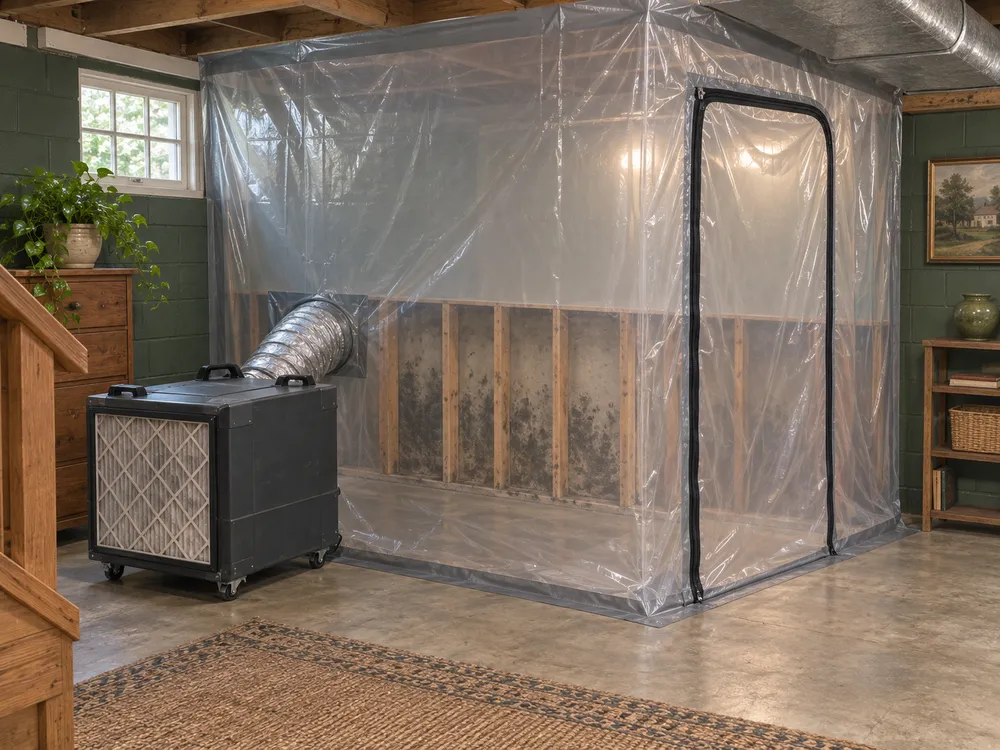
What is black mold?
Black mold is not a species or a specific kind of mold, according to the EPA. The term is often used for molds that may produce mycotoxins, or for one mold, Stachybotrys chartarum (EPA). The CDC describes Stachybotrys chartarum as a greenish-black mold (CDC).
Is black mold more dangerous than other mold?
The CDC says molds that produce mycotoxins, like Stachybotrys chartarum, should be considered the same as other molds that grow in a house (CDC NIOSH). It also says the color of mold does not indicate whether it is more or less dangerous (CDC NIOSH).
What should I do if I find black mold?
Treat it like any other mold: find and fix the moisture, then clean or remove the growth. The CDC says it is not necessary to identify the type of mold, and all molds should be treated the same with respect to removal (CDC).
Where does dark mold grow in Atlanta homes?
Stachybotrys grows on materials high in cellulose, such as drywall, fiberboard, paper and dust, when they stay wet from leaks, flooding or condensation (CDC). Common places to check are behind washing machines, under sinks, around windows, in crawl spaces and on drywall after a leak.
Common questions
Do I need to test black mold?
Usually not. The CDC says it is not necessary to determine what type of mold you have (CDC).
Is toxic mold a real thing?
The EPA says neither "black mold" nor "toxic mold" is a species or specific kind of mold (EPA). Some molds can produce toxins under certain conditions.
What if someone in the house has health symptoms?
See a doctor. The CDC says people with persistent symptoms should see their physician (CDC).
Related guides
Sources
- EPA: Mold Course Chapter 1
- CDC: Facts about Stachybotrys chartarum
- CDC NIOSH: mold testing and remediation
- EPA: A Brief Guide to Mold, Moisture and Your Home
Last reviewed November 13, 2026. This guide is general information, not legal, insurance or medical advice.