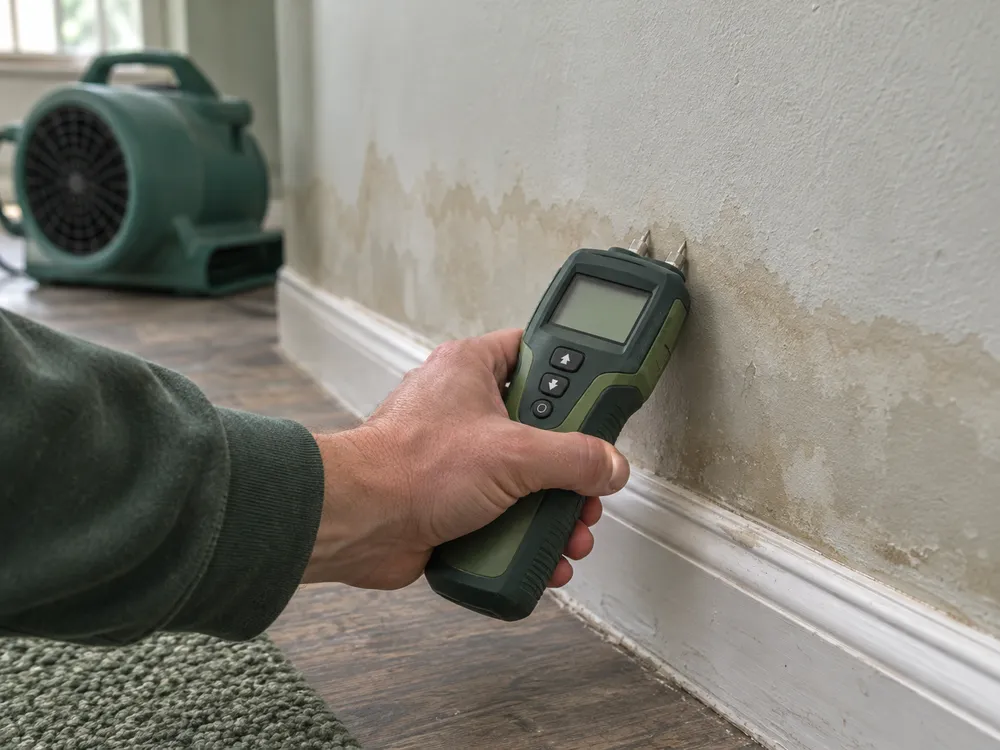
What is water mitigation?
Water mitigation is the work that limits damage after a leak: finding where the water traveled, removing materials that cannot be dried, running air movers and dehumidifiers, and checking moisture daily until readings are normal. The EPA says to dry water-damaged areas within 24 to 48 hours to prevent mold (EPA).
How is mitigation different from restoration and water removal?
Water removal gets standing water out in the first hours. Mitigation is the drying and material removal over the next several days. Restoration rebuilds what was removed once the structure is dry.
| Water removal | Mitigation | Restoration | |
|---|---|---|---|
| Goal | Get standing water out | Stop the damage from spreading | Rebuild what was removed |
| When | First hours | Usually the first several days | After the structure is dry |
| Equipment | Pumps, extractors | Moisture meters, air movers, dehumidifiers | Drywall, flooring, paint |
What happens each day of mitigation?
Most mitigation follows the same pattern: inspection and setup on day one, removal of wet materials on day one or two, daily monitoring visits, and a final reading that confirms the structure is dry.
- Day 1: inspection and setupThe crew finds the source, maps wet areas with meters, takes photos, extracts water and sets up drying equipment.
- Day 1 or 2: removalWet carpet pad, baseboards and the bottom of soaked drywall usually come out so the wall cavity can dry.
- Middle days: monitoringSomeone returns to take readings and move equipment. Expect fans running around the clock and a warm, noisy house.
- Final day: dry standardDrying ends when readings match unaffected areas of the house, not when the surface feels dry.
Atlanta homes that take longer
Crawl spaces, finished basements and hardwood over a subfloor hold water longer than a slab-on-grade room with vinyl plank. Ask for a written drying log either way.
What usually gets removed?
Materials that soak up water and cannot be dried in place are removed: soaked carpet pad, baseboards, the lower part of wet drywall and the insulation behind it. Anything touched by sewage is handled separately.
- Carpet pad that has been soaked.
- Baseboards, so the crew can see and dry behind them.
- The lower part of drywall that has wicked up water, often called a flood cut.
- Insulation inside wet walls.
- Anything touched by sewage. The EPA recommends a professional with contaminated-water experience for that (EPA).
What should I ask before mitigation starts?
- Will you give me daily moisture readings in writing?
- What are you removing, and why can it not be dried in place?
- Do you bill my insurer directly, or do I pay and get reimbursed?
- Is the rebuild included, or is that a separate estimate?
- Can I see your Georgia contractor license and certificate of insurance?
Common questions
Is mitigation the same as water removal?
No. Water removal gets the standing water out. Mitigation is the drying and material removal that follows, and it usually takes several days.
Can I dry it myself with box fans?
Surface water and a small spill, often yes. Water inside walls, under hardwood or in a crawl space usually needs meters and commercial dehumidifiers to confirm it is actually dry.
When should drying start?
As soon as possible. The EPA's guidance is to dry water-damaged areas within 24 to 48 hours to prevent mold growth (EPA).
Related guides
Sources
Last reviewed November 13, 2026. This guide is general information, not legal, insurance or medical advice.